Put the Oxygen Mask on Yourself First! by Wendy Keller You know how in airplanes,…
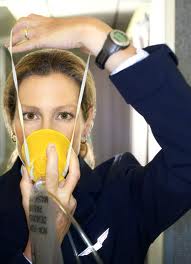

Help yourself first!

Put the Oxygen Mask on Yourself First!

by Wendy Keller

You know how in airplanes, there’s the safety warning before take-off?  What does it tell you?  Put the oxygen mask on yourself first – THEN you can help others. Because, duh, if you’re not breathing anymore, you’re not going to be all that helpful!

Yet so many people, when something really bad happens in their life, think that it’s their duty to help everyone else and put themselves last.  Like this will incur some sort of Divine Favor or something.  Or they put on a happy face, or “be strong for the family” or whatever other nonsense we tell one another.  “Chin up!” and “Get Well Soon”.  Putting the oxygen mask on yourself first is LOGICAL. It’s a great metaphor for taking care of your self – for two reasons.  First, if you fall apart, you become someone else’s burden; and second – you can’t contribute your gift, your inner beauty, your talent, your compassion or creativity, your love or your intelligence, your destiny or your mission to the world if you’re gasping for air yourself. 

We need you.  Please take care of yourself!

We all admire firemen and police because they rush in during a crisis. That’s brave and noble and needed!  But they aren’t the people directly affected. It’s not their liquor store that’s being robbed; it’s not their mother found on the floor not breathing; it’s not their domestic violence event.  The reason the emergency people can work calmly and do the right things is because they’ve undergone rigorous training – and their own emotions are not involved.

People in the immediate aftermath of a disaster in their lives are usually not capable of being calm: this is happening you!  If you’re in the acute suffering stage TAKE CARE OF YOURSELF!  Be easy on yourself. Don’t take on that extra project at work or your kid’s school. Use your sick day to stay home and journal about your pain.  Spend the money to get a therapist. Be gentle.  Give yourself a break.

As grown-ups, other than when you’re in the hospital or in desperate need, we’re expected to care for ourselves.  This creates an isolationist culture, where when people are really, truly, deeply hurting, they put on a show for others.  They say, “No, no, I’m fine.  How are YOU?”  They pretend they don’t need anything.  They’re strong and tough. (One sometimes sees men going through painful divorces showing overwhelming false bravado.) People sometimes lie or hide their pain so that hopefully, others can’t see it.

But you know what?

Failing to care for yourself – to put the oxygen mask on yourself first – prolongs your suffering! 

Especially women are trained to take care of others, to be selfless, to give and give – even when it’s time for them to receive.  If YOU are going through a rough time right now, it’s your turn. Here are some ways to help yourself at a very basic level to start breathing again.  There will be a time for you to give, but for now, on behalf of the world: here’s your permission to receive.


Five Quick Ways To Take Care of Yourself Today:

1. Commit to telling one person every day how you really feel.  It could be the surprised cashier at the grocery store, or it could be your friend or partner.  (Suggestion: don’t choose your minor child.) Sometimes, someone will comfort you by sharing their own story.  This is an attempt to bond.  Accept it compassionately.

2. If you feel overwhelmed by an emotion, immediately – and I mean right away – excuse yourself from the situation. At work, go in the bathroom or shut your office door and process it.  Either schedule a time you will let the emotion overwhelm you (which is far different than ignoring it in the moment!) and take a few breaths, or process it right now.  The day before my children’s funeral, I was afraid I’d start screaming during the service and never stop for the rest of my life.  Crying and screaming doesn’t last forever.  You’re not physically capable of it, for one thing.  Emotions pass, even if the baseline (for now) is just pure sadness.

3. Go into nature.  Even just a park.  Lean your back up against a tree.  Look up at the sky.  Go to the lake or the ocean for an hour.  Or lay on your belly in the grass and watch a bug walk around doing who-knows-what.  Buy yourself a flower or a plant and really study its structure, its colors.  Nature has a restorative effect on the human spirit.  Even 10 minutes can profoundly effect your mood.

4. Write it down.  Even if you’re not a writer.  Pour it out on the page. Use every adjective you can think of to describe your feelings or the person you think harmed you or the emotion you are experiencing or how it has all impacted your life.  Then –  I know this is weird but it works – re-write the first word of every paragraph on a new sheet of paper with a pen…with your opposite hand.  This stimulates the other hemisphere of your brain.  That hemisphere accesses a different perspective.  Just try it – you’ll see.

5. Go to bed earlier. Being tired, waking up stressed or crying, waking up with a new baby or a sick parent, day after day wears down the body’s stores of resilience.  Get more sleep tonight. Allow yourself to let the dishes sit, or the laundry to remain unfolded.  Turn off the TV.  Go to bed an hour earlier. If you can’t sleep, read a calming book.  (I recommend anything by Anthony de Mello, Thich Naht Han or don Miguel Ruiz.) 

The astonishing thing about taking care

of yourself is this:

when you do it, everybody around you also wins!


Would you like a copy of Wendy Keller’s FREE ebook

“The Top Ten Tips to Coping with Crisis”?


Rate Your Pain, Win a Prize! A dear friend of mine just went back to…


Rate Your Pain, Win a Prize!

A dear friend of mine just went back to his wife after months of painful separation. He said, “I feel guilty about leaving an ill person.”   But her illness is a mental one: she’s a hoarder and a compulsive gambler.  She refuses to get help, even though her behaviors are ruining the family and his personal future happiness. They are both suffering because of failure to manage their feelings.

Addictive behaviors occur when we don’t address the emotions that drive them.  Unresolved pain, grief, anger, and prolonged sadness are emotions that must be handled before they distort into life-damaging addictions.

But how? 

One thing that works is to “Rate Your Pain“.  Next time something unpleasant bubbles up inside of you, don’t shove it away thinking you’re being strong.  Don’t reach for your drug of choice – food, substances, cigarettes, mind-numbing hours watching TV, work, excessive volunteering or whatever it is.  Just follow this simple recipe for healing and you’ll be surprised how fast and how well it works.


Managing Your Emotions Effectively:

1. Go somewhere you can be alone.  Worst case: the bathroom.  Best case: lie down somewhere comfortable.

2. Think about how you’re feeling. Not the incident that triggers the feeling, but the feeling itself.  Name the feeling – are you sad? angry? scared? guilty? lonely? something else?

3. Now rate it on a scale of 1-10.  How BAD are you feeling?  Maybe not compared to the worst day of your life, but compared to the average days of your life.

4. Shut your eyes. Breathe in and out a few times.  Don’t judge yourself, don’t yell at yourself that you shouldn’t be responding this way, don’t give in to pushing it away with an addiction, a rash decision like my friend did, or compulsive behavior.  Just breathe slowly – four or five times.

5. Rate your feeling again.  Has it subsided? Has it gone completely away? If not, do steps three and four again.


The cool thing about feelings is that they are like storm clouds rolling fast across the plains.  By focusing on how you are really, truly feeling, you allow your brain and body to synchronize and release that energy.  The BIG prize is control over your life and emotional equilibrium again.

Depending on the issue, you may be fine for the rest of the day, or you may be back to rating your feelings in another 20 minutes.  It’s not like a chore you can cross off your To-Do List forever.  Rating your feelings is learning how to allow yourself to be yourself, to be in the moment, to do and feel and live what’s real for you.


Would you like a copy of Wendy Keller’s FREE ebook

“The Top Ten Tips to Coping with Crisis”?


There’s Plenty of Time to be Sad Have you ever been having an “OK” day…


Ever feel like this?

There’s Plenty of Time to be Sad

Have you ever been having an “OK” day when the memory of something painful just comes up and whacks you on the back of the head?  Have you ever been unexpectedly felled by seeing someone or something that reminds you of your pain, your trauma, your loss, your grief?

This is a universal human experience after a “trigger incident” – the divorce, death or other trauma that started your pain.  Thankfully, the frequency of those unexpected, punched-in-the-gut events typically begins to subside after a few years.  But in the meantime, most people are vulnerable to being broadsided by their emotions on the road to recovery.  They never know when they will next be debilitated by a painful and unexpected episode of anguish.  It can happen at work, while driving, while trying to tend a loved one.

It doesn’t have to be like this.

One of the most important things you can do for yourself if you find yourself burdened by unexpected recurrences of suffering is this:  schedule your grief.  When both my young children died in a car accident in 1991, I was certain if I fully gave in to my emotions I would never stop crying.  I’d just cry and cry for the rest of my life.

My friend Lora, who had lost her son to SIDS just a few months before, told me her best advice for beginning to control the uncontrollable:  schedule the grief.  She said, “Dare yourself to go thirty seconds without crying.”  Since I was lying in a hospital bed in considerable pain physically and emotionally, I had little else to do but stare at the slow-moving hands of the clock. I took the dare.

After a few days, I was able to go thirty seconds.  After a few weeks, I could go five minutes.  A year later, I could go a few hours straight on occasion.

People sometimes say, “Oh, what’s happened to me is nothing like what happened to you!”  But the truth is, if you are suffering then your pain is as painful for you as my pain was for me.  Pain cannot be counted, measured, compared.  If you’re hurting, and if unexpected recurrences of pain are disrupting your ability to function, sleep, love or live, then you really must try this step.

People who successfully manage their emotions allow them to be fully expressed – sometimes.  They don’t deny them but neither are they victims to their whimsical comings and goings. For instance, many men have been acculturated to believe that showing emotion is a sign of weakness.  For them in particular, and for women, too, learning to schedule grief can be a quantum leap in recovery from loss, pain or trauma. The emotions are getting processed but they are no longer in control. They are not being suppressed, they are being directed.

So how does one “schedule grief?”  It’s a trick of the mind and the calendar, really. You tell yourself, “I am going to be free, alone and available to really feel what I’m feeling next Saturday afternoon between 4 PM and 6 PM.  I choose to suffer, grieve, express rage, anger, tears, fury, sadness, deep depression – whatever it is – during that time.”  Then, when incidents happen during the week that trigger an emotional reaction, you catch yourself before it engulfs you and say, “I choose to feel this pain on Saturday from 4-6 PM, not now.  I need/want to function in my life now.”

When the appointed time to suffer arises, go ahead and feel it fully.  Cry, use a whole box of tissues, beat up the pillow, scream, do whatever you need to do.  Allow yourself to exorcise your pain fully.  You’ll know when it’s been used up.  Think of the instances that made you want to break down that you diverted until now.  Perhaps you saw a happy old couple holding hands, or a mother kissing her child’s forehead.  Perhaps a friend told you about a call she got from her loving, healthy parent or someone at work got the big promotion you thought would be yours. Let yourself reflect, wallow and succumb.  Be fully there. When your time is up or your pain is emptied, whichever comes first, get up. Change your physiology: take a shower, wash your face, go for a brisk walk, get around other people – whatever you need to do to “close” this session. And take a moment to schedule the next.

By learning to “compartmentalize” your pain, you begin to recognize that your mind is in charge of your emotional reactions.  With practice, the skill of scheduling your grief fosters a sense of confidence that you are not at the mercy of the event that triggered your pain.  You train yourself that emotions are a normal, healthy, human response to suffering, and that you can determine when to experience them.

One word of caution:  there will still be times when you are blindsided by pain.  Sometimes, especially when you are tired or overwhelmed, something will trigger a memory and your heart, mind and mood will spiral downward faster than you can catch them.  If you do not have the next grief session scheduled, even if it is six months away, you will find that you have a harder time catching yourself and stabilizing again.

When you stabilize and your brain begins the inevitable process of functioning again, emerge and set a time with yourself to feel the pain fully.

By learning to schedule your grief, you force yourself out of the victim mode and begin to take positive, strong, healthy steps toward incorporating your pain into your life, learning its lessons and moving forward into joy and peace again.


Would you like a copy of Wendy Keller’s FREE ebook

“The Top Ten Tips to Coping with Crisis”?


To Be a Grandfather For six and a half long, glorious, happy years, I was…


A grandfather and granddaughter

To Be a Grandfather

For six and a half long, glorious, happy years, I was the most important person in the Universe. Or well, at least in my family, until my mother remarried and then ruined everything by having my brothers*. I had been the only grandchild on either side. We are not breeders, so I am to this day the only female descendant in my entire generation.

Lucky me! I got all the attention, love, presents and admiration 20 or so grownups could dole out. But the ones who really mattered, the ones who made me who I am today, were my paternal grandmother and grandfather. My beloved goddess of a grandma died when I was nine, but her love had already formed my formative years. I was left to be doted on by my grandfather.

In my memory, he lived in a gigantic house he had built himself on a billion acres of Midwestern land. He knew how to do anything in the world that could ever be done. Sometimes we would lie on the grass in his front yard and watch the clouds to see if they made animal shapes. I remember us making yards and yards of daisy chains out of his plentiful dandelions, then he’d wrap them around and around me and we’d laugh ourselves silly. He told me the crows were really talking to me. He taught me to make wax candles, and occasionally fed me paper-thin slices of Snickers bars that we hid from my watchful mother.

My darling grandfather has been dead a long time now, but I miss him almost every day.

My friend George became a grandfather himself last week. His only daughter just brought forth a son. I told George about my grandfather, about how in the darkest hours of my life to follow, it was the adoration, indulgence and unfathomable love I received from my grandparents that gave me the strength to endure; to believe that underneath all the calamities, I still was a valuable person; that things might turn out OK however bleak they seemed.

Someday, I predict Sophia, my daughter, will have babies. One day, I’ll be a grandmother. I vow to the memory of my own grandparents that I will not forsake my sacred duty to love, cherish, nurture, play with, guide, care for and admire that little miracle when it is born.

Do any of us ever fully realize the impact we have on another’s life? How the simplest things can create a lifetime of impact?


* PS – My brothers grew up into two of the most wonderful, caring, loving men I’ve ever known. I can’t imagine life without them!


Would you like a copy of Wendy Keller’s FREE ebook

“The Top Ten Tips to Coping with Crisis”?


The Crucially Important Survival Tool: Hope by Wendy Keller, author & inspirational speaker In a…


The hospital in England where they were so compassionate toward us.

The Crucially Important Survival Tool: Hope

by Wendy Keller, author & inspirational speaker

In a film I saw yesterday, one woman was crying to another that “they” had taken everything away from her. It was a poignant moment, because “they” had. The older woman strokes the crying woman’s back and says, “No, Tillie. You still got one thing left. They can’t take that.”

Tillie mumbles, “What is it?”

The older woman looks forlornly off into the distance and says, “Hope. They can’t take away your hope.

At the lowest points of my life, when every single thing was black and dark, cold and scary, I’ve often pondered “hope”. I remember when hope saved my life.

I clearly remember the feelings I had right after both my children died in that car accident, when my leg was so badly crushed they didn’t think I’d ever walk again, and I was in so much physical, emotional and spiritual pain that I made several attempts at suicide. All attempts were thwarted by the nurses at Cheltenham General (see photo). I was mostly paralyzed and lacked viable options.

More than anything, I yearned to die. There was nothing left to live for. My babies were on ice in the morgue below my hospital bed. I planned on never laughing again, never smiling, never having a day without crying. I had become a Bereaved Mother. I will always be a bereaved mother, from that day to this. It’s What Is.

My friend Lora Lewis called my draughty hospital room. Her precious son Sydney had died of SIDS back home in the USA just a few months earlier. I loved her dearly and his loss was the most devastating thing I’d ever experienced – until now that my own children were dead, too.

I said, “Lora, will I ever stop crying?”

She said, “Do you have a clock there? Watch the second hand. See if you can go thirty seconds without crying. When you achieve that, do some more.”

Seeing as every bone on my left side was crushed from my knee to my neck, I didn’t have a whole lot to do except look at the big, ugly industrial clock on the pale green wall of my hospital room.

After a few days, I went thirty seconds without crying!

After a few months, I had worked up to sometimes a whole hour!

After a few years, I could sometimes go a whole day!

Whether crying is good or bad is not the point. The point is that Lora’s simple challenge gave me something precious: hope. It set in my mind the expectation that somehow, one day, I might not spend the whole day in mourning, the whole day enveloped in bleakest anguish.

Hope is a miracle drug. When we allow in even the tiniest microscopic speck of hope that things can get better, it generates in even the most wounded heart the energy to begin the long, slow, bumpy journey back.

My son Jeremy and my daughter Amelia have been dead since the spring of 1991. I miss them and think of them every single day. I cry over their loss dozens of times a year.

But in between grief, there is light and life.


PS – This is really strange, but when I looked up the photo of the hospital, it was the first time in my life I’d ever seen it!  They brought me in and took me out on a stretcher.  I had a vague recollection of some pillars – and that was it!   I DO remember that the lovingkindness of the staff was amazing.  They were so sensitive and compassionate.


Would you like a copy of Wendy Keller’s FREE ebook

“The Top Ten Tips to Coping with Crisis”?